Hyperliquid Goes Permissionless: The HIP-4 Upgrade Set to Disrupt Prediction Markets
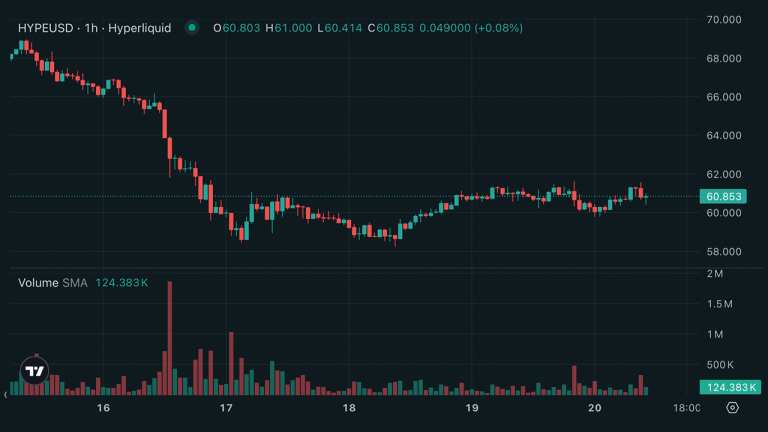
Hyperliquid is shaking up the decentralized betting landscape by announcing that its HIP-4 outcome markets will move to a permissionless deployment model. This upcoming network upgrade will empower users to launch their own prediction markets without centralized gatekeepers.
By transitioning to a permissionless framework, Hyperliquid is doubling down on its commitment to decentralization and user autonomy. The rollout, scheduled to occur in two distinct stages, is expected to catalyze massive growth in on-chain prediction markets and expand the utility of the Hyperliquid ecosystem.
Hyperliquid informed its community on July 19 that its outcome markets product, known as HIP-4, will transition to permissionless deployment in a forthcoming network upgrade. The announcement, shared via the exchange’s official Telegram channel, outlines a strategic two-stage rollout.
This move is designed to democratize the creation of prediction markets, allowing anyone to deploy outcome-based contracts on the network. As Hyperliquid pushes the boundaries of DeFi, the HIP-4 upgrade positions the platform as a primary infrastructure provider for the next generation of decentralized prediction markets.
This is a summarized and adapted version by Artificial Intelligence. To read the complete original story, visit the official source.
Read Full Article at Bitcoin.comSupport Jornal Bitcoin
Independent journalism, curated by AI, no clickbait. Keep the flame alive with any amount of BTC.
jonata@walletofsatoshi.comDaily Crypto Brief 📬
Subscribe to receive the curation of the most important Bitcoin and crypto news, summarized by AI. No spam.
Join more than 10,000 smart readers.
Related News

Marseille's Memphis Depay Pursuit Hits a Wall Over Massive Salary Demands
This development underscores the delicate balance clubs must maintain between securing high-profile talent and adhering to strict financial constraints. The failure to reach an agreement on wages leaves Depay's future uncertain and Marseille searching for alternative solutions in the transfer market.

End of an Era: Jack Mallers Exits Twenty One as Bitcoin Treasury Pressure Mounts
Raphael Zagury now inherits a massive Bitcoin balance sheet and a daunting mandate. The core challenge lies in proving that a heavy Bitcoin treasury can effectively support a durable business model amidst ongoing market fluctuations.

Game Changer: New CFTC Self-Reporting Guidelines Could Reshape Crypto Enforcement
This development marks a significant pivot in how crypto enforcement incentives are structured. By rewarding voluntary disclosure, the CFTC is attempting to foster a culture of accountability, potentially reducing the long-term legal volatility that has plagued the cryptocurrency market.

Market Shock: Jack Mallers Exits Twenty One Capital as Tether's Bitcoin Merger Fails
The failure of this massive Bitcoin merger marks a significant setback for institutional consolidation efforts. As Mallers exits and the Tether deal falls apart, investors are bracing for increased volatility and a re-evaluation of the strategic direction within the Bitcoin infrastructure landscape.

MEXC Unleashes Bittensor (TAO) Staking: A Massive Leap for Decentralized AI
This integration is designed to scale the Bittensor ecosystem, which currently boasts 128 specialized subnets dedicated to complex machine learning tasks. As Yuma evaluates subnet performance to distribute staking rewards, this partnership between MEXC and Bittensor significantly boosts network participation and strengthens the utility of the TAO token within the global AI landscape.

OpenAI's Fear: Why Open-Weight Models Are Threatening the AI Monopoly
Beyond the rhetoric of safety, this is a multi-billion dollar battle for control over the global AI landscape. As we approach 2026, the friction between proprietary systems and open-weight ecosystems will determine the future of technological sovereignty and economic power.
