SEC Warning: Hester Peirce Signals Crypto Vaults and Lending Strategies Could Still Hit Securities Rules

SEC Commissioner Hester Peirce has issued a pivotal warning regarding the regulatory status of emerging crypto financial products. Her analysis suggests that crypto vaults and sophisticated lending strategies may still trigger securities laws, posing a significant compliance challenge for both centralized entities and decentralized protocols.
This development underscores the ongoing struggle to define the boundaries of digital asset regulation. As the industry evolves, the classification of yield-bearing products remains a high-stakes issue that could reshape how liquidity is managed and how decentralized finance (DeFi) interacts with traditional legal frameworks.
SEC Commissioner Hester Peirce has warned that certain crypto vault structures and lending strategies may still fall under the jurisdiction of securities regulations. The warning highlights the growing complexity of digital asset management and the potential for yield-generating products to be classified as investment contracts.
While Peirce is often regarded as a pro-innovation voice within the commission, her comments emphasize that the legal definition of a security remains a critical hurdle. For platforms offering automated lending or managed vaults, the risk of regulatory enforcement remains high if these services are deemed to be offering unregistered securities to the public.
This is a summarized and adapted version by Artificial Intelligence. To read the complete original story, visit the official source.
Read Full Article at NewsBTCSupport Jornal Bitcoin
Independent journalism, curated by AI, no clickbait. Keep the flame alive with any amount of BTC.
jonata@walletofsatoshi.comDaily Crypto Brief 📬
Subscribe to receive the curation of the most important Bitcoin and crypto news, summarized by AI. No spam.
Join more than 10,000 smart readers.
Related News

The AI Revolution: Anthropic's Claude Opus 5 Shatters Expectations and Redefines Intelligence
The implications of this release are profound, as it redefines the boundaries of what artificial intelligence can achieve. By pushing the limits of cognitive reasoning, Claude Opus 5 sets a new benchmark for the industry, forcing competitors to rethink their development roadmaps in the era of advanced generative AI.

Iran Defies Trump, Maintains Hardline Stance on Strait of Hormuz
The implications of this standoff extend far beyond regional politics, posing significant risks to global energy supplies and market stability. As tensions simmer, the potential for maritime blockades remains a critical variable for macro traders and crypto investors looking to hedge against sudden geopolitical shocks and volatility.

Why Bitcoin Dipped Below $64K Today: The Political Catalyst Shaking the Market
The primary driver behind this market instability is the influence of the POTUS, whose recent actions and statements have once again rattled investor sentiment. As Bitcoin searches for a new floor, market participants are closely watching how political shifts in Washington continue to dictate the trajectory of the crypto market.

AI Power Shift: Claude Opus 5 Outperforms Fable 5 on Key Benchmarks at Half the Cost
This strategic move signals a shift in the competitive dynamics of the artificial intelligence industry. By delivering frontier-level capabilities at half the cost, Anthropic is setting a new standard for scalability, making high-tier intelligence accessible to a much broader range of developers and enterprise users.

Crypto Shakeup: Central Bank Rules Force Small Exchanges Out of the Market
This regulatory tightening is driving up operational costs, making it increasingly difficult for smaller players to compete. Consequently, we are witnessing an accelerated consolidation of the sector, as smaller exchanges are pushed out, leaving the market to be dominated by larger, more resilient institutional players.
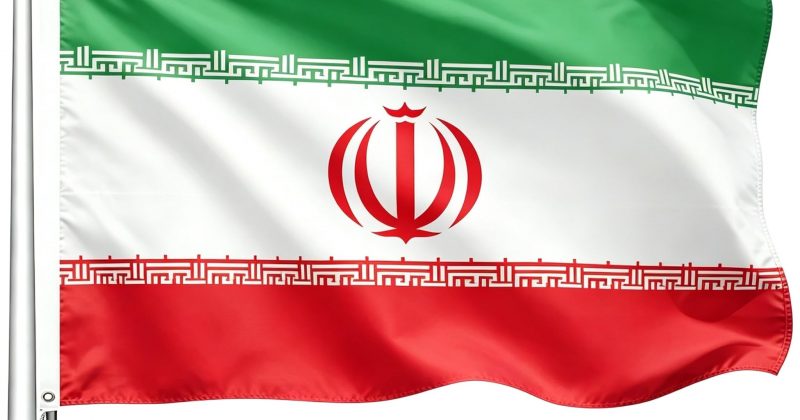
Geopolitical Alert: Iran Warns US of 'Painful' Consequences Amid Escalating Tensions
Adding complexity to the situation, reports indicate a 29% approval rate for the proposed Iran reconstruction funding deal slated for 2026. As tensions rise, the interplay between international diplomacy and economic stability remains a key driver for macro-economic shifts and investor sentiment regarding high-risk assets.
