AI Chip Wars: Google Targets Nvidia Customers in Aggressive TPU Sales Push
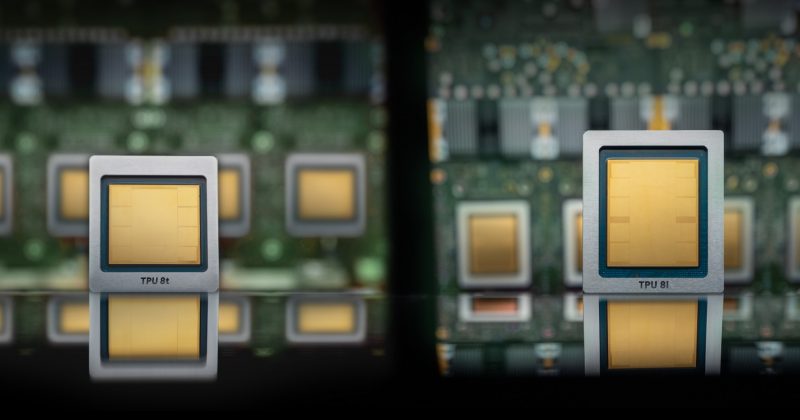
Google is launching an aggressive sales offensive for its TPUs (Tensor Processing Units), specifically targeting Nvidia's massive customer base. This strategic pivot signals a major shift in the AI chip wars, aiming to disrupt the current market dominance and introduce much-needed competition into the hardware landscape.
By challenging Nvidia's stronghold, Google is positioning itself as a primary alternative for companies seeking specialized AI hardware. This shift could lead to a more diversified semiconductor market, potentially lowering the barrier to entry for AI development and reshaping how cloud computing giants compete for computational supremacy.
Google's aggressive TPU sales strategy could reshape the AI chip market, challenging Nvidia's dominance and diversifying industry competition. By targeting Nvidia's core customers, Google is signaling a major shift in the AI chip wars, moving from a provider of cloud services to a direct competitor in the high-stakes semiconductor race.
This is a summarized and adapted version by Artificial Intelligence. To read the complete original story, visit the official source.
Read Full Article at Crypto BriefingSupport Jornal Bitcoin
Independent journalism, curated by AI, no clickbait. Keep the flame alive with any amount of BTC.
jonata@walletofsatoshi.comDaily Crypto Brief 📬
Subscribe to receive the curation of the most important Bitcoin and crypto news, summarized by AI. No spam.
Join more than 10,000 smart readers.
Related News

Silicon Valley Unrest: Protesters Demand Immediate Halt to AI Development from OpenAI and Google
This movement highlights escalating fears regarding AI safety, the environmental footprint of massive computing power, and the potential for widespread job displacement. As the debate intensifies, the pressure on AI companies to prioritize ethical guardrails over rapid scaling has never been higher.

Anthropic’s AI Value Audit: The Hidden Moral Compass of Claude Revealed
However, a strategic gap remains: the research focused heavily on three legacy versions of Claude that are no longer in active sale. While these findings provide clarity on past iterations, no one has yet published a comprehensive value profile for the cutting-edge models currently holding the keys to the AI revolution, leaving a critical question of transparency unanswered.

Security Breach: xAI’s Grok Build CLI Caught Uploading Private Code and Secrets to Google Cloud
The incident highlights the critical need for transparency and robust data privacy measures in AI tools to prevent unauthorized data exposure. As AI integration deepens within the tech stack, ensuring rigorous cybersecurity protocols and data governance is essential to mitigate the risks of intellectual property theft and accidental leaks.

AI Identity Crisis? Anthropic Research Shows Claude’s Personality Shifts by Language and Model
This discovery highlights a critical challenge in the development of large language models: linguistic bias. As developers strive for global alignment, the fact that Claude's personality fluctuates across different languages suggests that AI ethics may be subject to cultural and linguistic nuances that are not yet fully understood.

BNB Chain Joins the AI Race: New 'Agent Studio' Targets Developers to Secure Ecosystem Dominance
This strategic push demonstrates that the Binance ecosystem is doubling down on the developer narrative to maintain its competitive edge. By integrating sophisticated deployment tools, BNB Chain aims to become the foundational layer for decentralized AI applications, bridging the gap between traditional cloud infrastructure and the future of autonomous blockchain agents.

AMD Strikes Back in the AI War: New ROCm Certification Targets AI and HPC Experts
By fostering a certified workforce, AMD is building a moat around its hardware capabilities, ensuring that the next generation of AI workloads can run seamlessly on its architecture. This certification program is a critical component in scaling the adoption of Instinct GPUs within enterprise data centers and global supercomputing networks.
