Winklevoss Twins' $10M Trump Donation: Political Play or Data Misinterpretation?

A massive financial movement involving the Winklevoss twins and Donald Trump's Super PAC has sent shockwaves through the crypto community. The $10 million donation, timed just 23 days after the CFTC joined Gemini's relief bid, has sparked intense debate regarding the intersection of crypto wealth and political influence.
Crucially, a closer look at the FEC filings suggests the headline may be misleading. The data indicates that Gemini is listed because it liquidated the same Bitcoin used in the transaction, rather than the exchange making a fresh $10 million donation. This distinction is vital for understanding the true nature of the exchange's involvement in political financing.
However, matching FEC rows clarify the situation: the records name Gemini because the exchange liquidated the same Bitcoin involved, not because the exchange donated another $10 million. The apparent political donation appears to be a misunderstanding of how asset liquidations are recorded in election filings.
This is a summarized and adapted version by Artificial Intelligence. To read the complete original story, visit the official source.
Read Full Article at CryptoSlateSupport Jornal Bitcoin
Independent journalism, curated by AI, no clickbait. Keep the flame alive with any amount of BTC.
jonata@walletofsatoshi.comDaily Crypto Brief 📬
Subscribe to receive the curation of the most important Bitcoin and crypto news, summarized by AI. No spam.
Join more than 10,000 smart readers.
Related News

Bitcoin Spot Market Stagnates, but Derivatives Signal a Major Shift
This decoupling of spot and derivatives markets is a critical metric for institutional sentiment and liquidity forecasting. As derivatives activity improves, the potential for rapid price discovery increases, indicating that the current period of low spot volume may simply be the calm before a significant market expansion driven by leveraged positions.

Why 'Proof of Node' is Failing to Shake Bitcoin's Foundation
Drawing parallels to the 2017 UASF, history proves that nodes only succeed in driving change when backed by massive investor weight and developer consensus. Without this widespread adoption, the 'Proof of Node' concept remains a marginal movement incapable of altering the core Bitcoin protocol.

CLARITY Act: The Key to Empowering the CFTC Against Prediction Market Surge
By granting additional oversight powers, the proposed Digital Asset Market Clarity (CLARITY) Act aims to bolster market integrity. This legislative move is seen as essential for regulating high-growth platforms like Polymarket and Kalshi, ensuring robust customer protections in the evolving digital asset landscape.

Jack Dorsey Takes on Slack with New Open Source Decentralized Chat App
By leveraging open-source principles, Dorsey is positioning Block at the forefront of the decentralized communication movement. This move is expected to impact how enterprises view data sovereignty and privacy, providing a robust alternative to traditional SaaS models through the lens of Web3 technology.
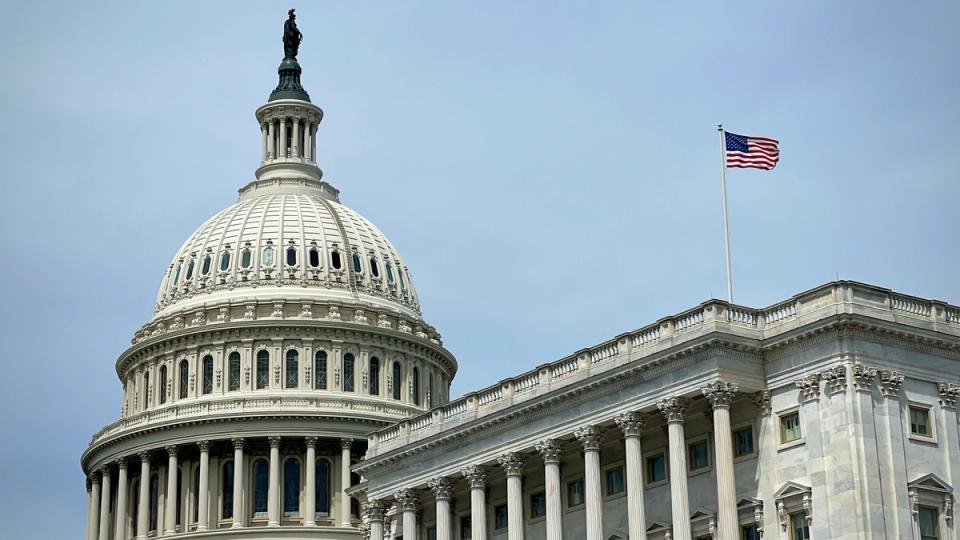
Crypto Clarity Act Stalls as Democrats Push Back Against Trump-Backed Ethics Deal
This friction highlights the deep political divide over how digital assets should be governed and who should be restricted from trading them. As negotiations continue, the industry remains in a state of limbo, waiting to see if a compromise can be reached to provide the regulatory certainty the crypto market desperately needs.

Gold Era Over? Bitcoin Ownership Surpasses Gold Among US Adults
As the market anticipates significant growth, with Bitcoin potentially hitting $67,500 by July 2026, the implications for global finance are profound. This surge in Bitcoin adoption suggests that the digital gold narrative is no longer just a theory, but a dominant economic reality driving institutional and retail interest alike.
