Security Breach: Garden Finance Shuts Down App Following $450,000 Exploit

Garden Finance has taken its application offline following a major exploit reported by security firm Blockaid, which resulted in the theft of approximately $450,000 in USDT. The attacker successfully targeted the protocol's Hash Time-Locked Contracts (HTLC) across several major networks, including Ethereum, Base, Arbitrum, and BNB Smart Chain.
This breach highlights the ongoing vulnerabilities within cross-chain bridging and atomic swap protocols. As the attacker exploited the time-bound escrow mechanisms used to facilitate Bitcoin swaps, the incident serves as a stark reminder of the security risks inherent in multi-chain interoperability within the DeFi space.
HTLCs are time-bound escrow contracts that Garden Finance utilizes to facilitate atomic swaps between Bitcoin and assets on other networks. While Blockaid's initial alert described the exploit as an ongoing event, the specific vulnerability has not yet been disclosed, and it remains unclear whether the incident has impacted broader user funds beyond the initial reported amount.
This is a summarized and adapted version by Artificial Intelligence. To read the complete original story, visit the official source.
Read Full Article at CoinTelegraphSupport Jornal Bitcoin
Independent journalism, curated by AI, no clickbait. Keep the flame alive with any amount of BTC.
jonata@walletofsatoshi.comDaily Crypto Brief 📬
Subscribe to receive the curation of the most important Bitcoin and crypto news, summarized by AI. No spam.
Join more than 10,000 smart readers.
Related News
WEMIX Exploit: Attacker Siphons $724K After Compromising WEMIX$ Stablecoin Contract
To mitigate the fallout, WEMIX has suspended all bridges, liquidity-pool trading, and several key services. The stolen funds were bridged to Ethereum and BNB Smart Chain, eventually being swapped for Ether and Tether (USDT) before being distributed across multiple wallets, prompting WEMIX to coordinate with centralized exchanges for immediate asset freezes.

Brazil moves massive crypto volume: top 10 most traded coins revealed (USDT leads)
The ranking highlights how traders in Brazil prioritize liquidity and exchange efficiency through stablecoins, with USDT consistently driving the biggest share of trading interest. In effect, this pattern strengthens stablecoins’ role in daily market access, trading volume concentration, and price-setting across the local crypto ecosystem.
TRON Dominance: Network Surpasses $90B in USDT and Hits Massive Crypto Card Volume
This exponential growth underscores the practical utility of the TRON blockchain for real-world transactions and everyday payments. The surge in protocol revenue and the rising adoption of payment solutions indicate that the network is evolving into an essential financial infrastructure, outperforming competitors in liquidity volume and network efficiency.
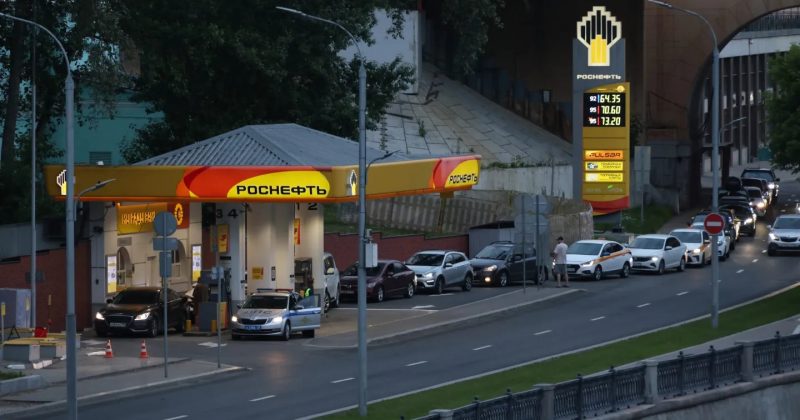
Russia Extends Gasoline Export Ban as Crypto Becomes Vital Sanctions Bypass
This pivot highlights the growing role of digital assets in navigating geopolitical volatility and financial isolation. By leveraging the liquidity and pseudonymity of crypto, Russian-linked trade is finding a new lifeline, proving that decentralized finance is becoming a critical tool for maintaining global commodity flows under pressure.
Kenya Crackdown: Binance Wallet Probe Widens as $888K in USDT is Frozen
This crackdown underscores the increasing pressure on crypto exchanges to implement robust compliance measures. As investigators trace complex digital trails, the seizure serves as a stark reminder that the use of stablecoins and parallel channels to evade detection is becoming increasingly difficult under heightened global regulatory scrutiny.

TRON Revolution: Gasless USDT Volume Surges to a Massive $3 Billion
By making stablecoin payments smoother and more accessible, TRON is cementing its dominance in the global payments landscape. This breakthrough in transaction efficiency is expected to drive massive adoption among users who prioritize speed and low-cost utility in their digital asset transfers.
