The Million-Dollar Mistake: Why Waiting for Bitcoin's 4-Year Cycle Bottom Could Backfire

Stop waiting for the dip: the classic Bitcoin four-year cycle strategy is facing a massive disruption. Market analysts warn that relying solely on historical patterns could lead to significant missed gains as the market structure undergoes a fundamental shift.
Institutional developments and the massive influx of capital through Bitcoin ETFs are actively reshaping market dynamics. This institutionalization means the predictable halving-driven cycles may no longer hold true, potentially causing the market to move upward much faster than retail investors anticipate.
A prominent market analyst warns that waiting for the bottom of Bitcoin's traditional four-year cycle could be a costly mistake for investors. The core argument is that the market is no longer operating under the same rules that governed previous bull and bear runs.
Institutional developments are the primary driver behind this shift. As major financial institutions integrate Bitcoin into their portfolios via ETFs, the historical supply-demand mechanics are being rewritten. This structural evolution suggests that the typical cycle patterns are being disrupted, meaning the 'bottom' might arrive much sooner—or much higher—than historical models predict.
This is a summarized and adapted version by Artificial Intelligence. To read the complete original story, visit the official source.
Read Full Article at CryptoPotatoSupport Jornal Bitcoin
Independent journalism, curated by AI, no clickbait. Keep the flame alive with any amount of BTC.
jonata@walletofsatoshi.comDaily Crypto Brief 📬
Subscribe to receive the curation of the most important Bitcoin and crypto news, summarized by AI. No spam.
Join more than 10,000 smart readers.
Related News

Bitcoin Surge: BTC Breaks $66K, Hitting a Month-High Rally
The rally is being fueled by a convergence of global economic drivers, including gains in Asian stock markets and a decline in oil prices. Crucially, massive inflows into Bitcoin ETFs continue to provide the liquidity and institutional backing necessary to sustain this upward momentum.

Oil Surges Near $90: Why is Bitcoin Holding Strong Above $66,000?
While geopolitical tensions involving US-Iran ceasefire proposals cause fluctuations in oil prices, the Bitcoin price action has remained robust, navigating an intraday range between $63,100 and $66,313. This decoupling suggests that the Bitcoin market may be reacting to unique liquidity drivers rather than following the inflationary pressures typically associated with rising oil costs.

Bitcoin Breaks Resistance to Hit $66K: One-Month High Sparks Bullish Momentum
Market experts are now eyeing a potential 6% upside for Bitcoin if the current momentum continues to build. This breakout attempt is a critical indicator for traders, as sustaining these levels could trigger a broader rally across the entire cryptocurrency market.

Tesla's $25 Billion AI Gamble: Will the Massive Spending Spree Impact Its Bitcoin Holdings?
Currently holding 11,509 BTC—valued at roughly $786 million—Tesla sits at a crossroads between funding its AI ambitions and preserving its digital assets. The potential for negative cash flow has sparked a debate on whether the company's crypto holdings will serve as a strategic buffer or a source of liquidity for its robotics revolution.

Geopolitical Crisis: US Troops Killed in Jordan Strike Amid Rising Middle East Tensions
With reports suggesting a potential full airspace closure in Iran by August 31, the threat of a broader regional conflict looms large. This heightened uncertainty is expected to drive significant volatility across crypto markets, as traders react to the shifting landscape of global security and potential energy supply disruptions.
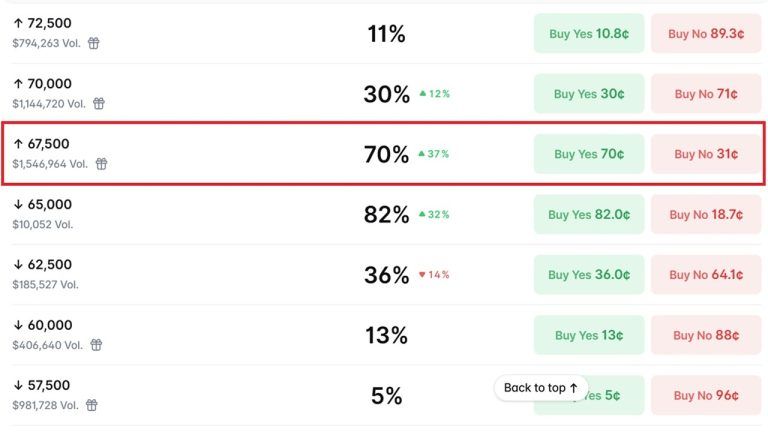
Massive Bet: Bitcoin Traders Give 70% Odds of BTC Hitting $67,500 in July
As Bitcoin trades near the $66,000 mark, this surge in betting odds suggests a strong anticipation of a modest bounce from recent lows. Traders are closely monitoring the $65,000 support level, betting that the asset has sufficient momentum to trigger a rebound and test higher resistance levels before the month concludes.
