DeepSeek Challenges Giants: Chinese Startup to Develop In-House AI Chips
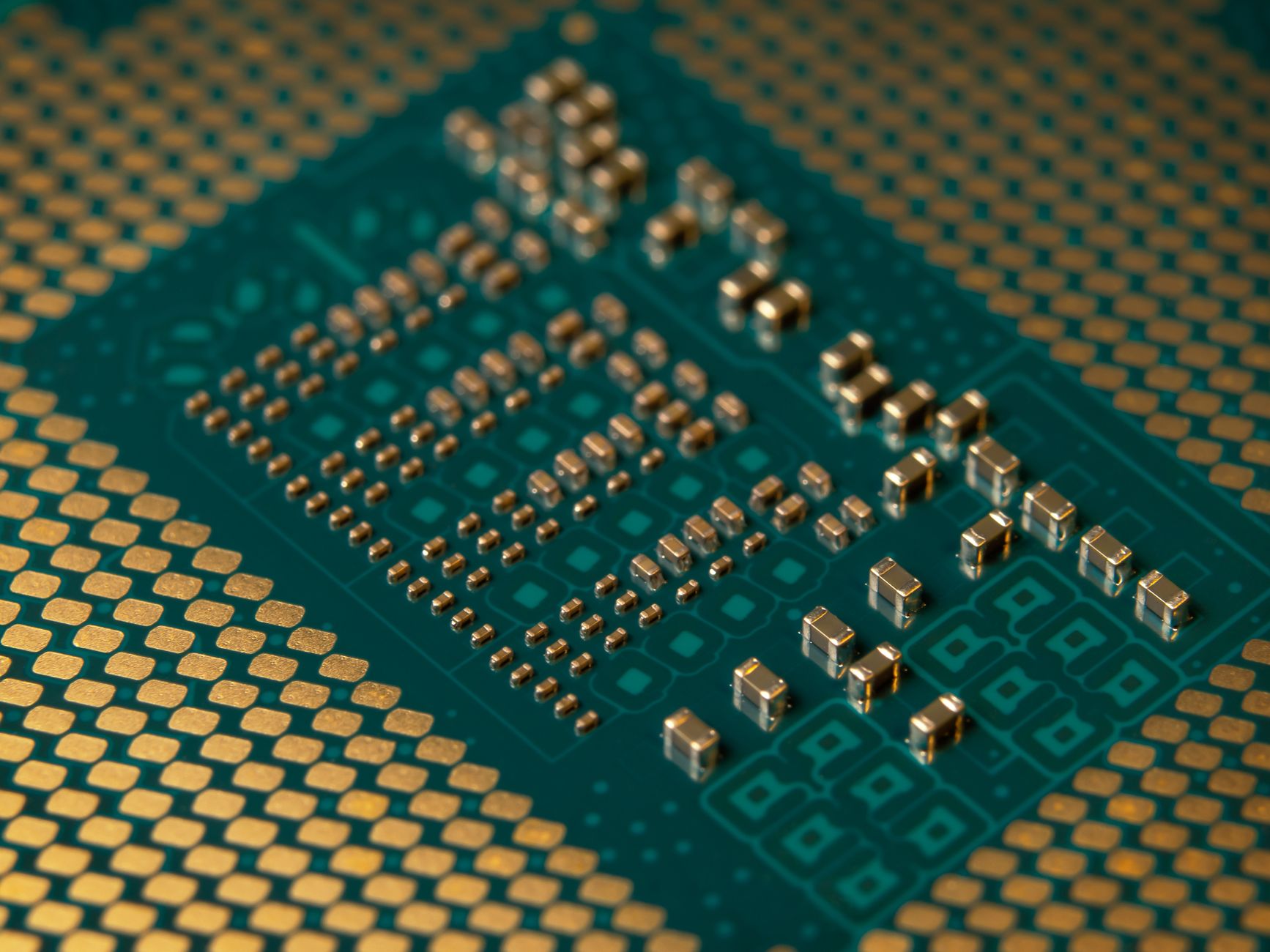
Chinese startup DeepSeek has officially entered the semiconductor race by announcing the development of its own proprietary AI inference chip. This strategic pivot aims to optimize computational efficiency and secure a competitive edge in the rapidly evolving artificial intelligence landscape.
This move has the potential to reshape China's $50 billion semiconductor market. By developing in-house hardware, DeepSeek is not just building a product, but is actively participating in the global struggle for technological sovereignty and hardware independence in the age of AI.
The Chinese startup DeepSeek has entered the semiconductor race with the announcement of its own proprietary inference chip. This move, aimed at optimizing the processing of large-scale AI models, could fundamentally redesign China's $50 billion semiconductor market. The initiative seeks to provide much-needed technical autonomy amidst tightening global restrictions on high-end hardware.
This is a summarized and adapted version by Artificial Intelligence. To read the complete original story, visit the official source.
Read Full Article at BlockTrendsSupport Jornal Bitcoin
Independent journalism, curated by AI, no clickbait. Keep the flame alive with any amount of BTC.
jonata@walletofsatoshi.comDaily Crypto Brief 📬
Subscribe to receive the curation of the most important Bitcoin and crypto news, summarized by AI. No spam.
Join more than 10,000 smart readers.
Related News

Energy Alert: AI and Crypto Mining to Drive US Power Demand to Record Highs by 2027
This projected spike threatens to strain existing energy resources, potentially triggering significant shifts in national energy policy and market dynamics. As AI and crypto mining become dominant energy consumers, the intersection of technology and power infrastructure will become a critical battleground for stability and regulation.
NVIDIA AI Aerial Breakthrough: Boosting RAN Spectral Efficiency by 1.6x
This advancement marks a critical shift toward software-defined, AI-driven connectivity. As operators face increasing data demands, NVIDIA's ability to optimize spectral resources through high-performance computing provides the necessary scalability for the upcoming transition to 6G infrastructures.

Game Changer? Austin Griffith Unveils $1 AI-Powered Security Audit Service
While this low-cost model is set to spark massive innovation across the industry, it introduces a significant debate regarding over-reliance on automated checks. The tension between rapid, AI-driven deployment and the rigorous scrutiny of manual audits will define the next era of smart contract security.

AI Gold Rush: SK Hynix’s $28B US Listing Oversubscribed, Signaling Massive Appetite for AI Chips
This overwhelming demand serves as a critical barometer for the broader tech sector, highlighting the urgency to secure hardware capabilities. By successfully tapping into this liquidity, the move could potentially ease future memory shortages, providing the necessary stability for the continued expansion of global artificial intelligence capabilities.
NVIDIA's Vera CPU Crushes x86 Performance in Agentic AI Race
This shift represents a critical evolution in AI infrastructure, addressing the computational bottlenecks that hinder autonomous agents. As NVIDIA integrates its Vera CPU with its existing GPU dominance, the company is effectively building a closed-loop ecosystem designed to power the most demanding artificial intelligence applications on the planet.
NVIDIA Vera CPU Breakthrough: 50% Faster Performance for the Next Era of Agentic AI
This technological leap is set to revolutionize the operational capacity of agentic AI factories, providing the backbone needed for autonomous agent ecosystems. As AI workloads become increasingly complex, the Vera CPU ensures that data centers can scale efficiently, maintaining high-speed execution and optimized throughput for the next generation of intelligent automation.
