Iron Resilience: How Bitcoin Survived Its Biggest Miner Walkout Ever

The Bitcoin ecosystem has demonstrated unexpected robustness by navigating one of its most significant operational hurdles: a massive exodus of miners driven by harsh economic conditions. This intel brief highlights how the protocol maintained its core integrity and network security despite a drastic reduction in miner participation.
This event underscores Bitcoin's inherent ability to adapt to market volatility. As miners exit the space due to diminishing profitability, the network's difficulty adjustment mechanism kicks in, ensuring the blockchain remains decentralized and functional regardless of external pressures on hardware and energy costs.
A recent episode in the Bitcoin network's history highlights its unique ability to adapt when economic conditions force significant changes in miner participation. Instead of collapsing under the pressure of a mass exit, the protocol utilized its difficulty adjustment mechanisms to stabilize the system. This phenomenon proves that Bitcoin's security does not rely on the constant presence of every participant, but rather on the structural resilience of its code, allowing the network to survive cycles of low profitability and drastic shifts in the global mining landscape.
This is a summarized and adapted version by Artificial Intelligence. To read the complete original story, visit the official source.
Read Full Article at CryptoPotatoSupport Jornal Bitcoin
Independent journalism, curated by AI, no clickbait. Keep the flame alive with any amount of BTC.
jonata@walletofsatoshi.comDaily Crypto Brief 📬
Subscribe to receive the curation of the most important Bitcoin and crypto news, summarized by AI. No spam.
Join more than 10,000 smart readers.
Related News

Massive Gains Ahead? Analyst Claims Altcoins Down 90% Could Outperform Bitcoin
This shift suggests that the explosive upside potential of these undervalued altcoins could significantly outperform Bitcoin in the upcoming market cycle. As Bitcoin dominance remains high, identifying these 'bottomed out' assets is becoming a key strategy for those chasing high-alpha returns.

Trump's Bitcoin Conference Keynote: Crypto Policy Takes Center Stage
As the keynote approaches, the implications for the broader market are profound. The intersection of high-stakes politics and crypto regulation suggests that the future of Bitcoin and digital assets will increasingly depend on the shifting tides of US political agendas and campaign promises.

ARK Invest’s $77M Crypto Bet: Massive Stock Buys Amid 99% Polymarket Odds for BTC Surge
Adding fuel to the bullish sentiment, Polymarket data reveals a staggering 99% probability that Bitcoin will exceed the $52,000 threshold. This convergence of aggressive institutional buying and high-probability market predictions suggests that major players are positioning themselves for a significant recovery in the crypto market.
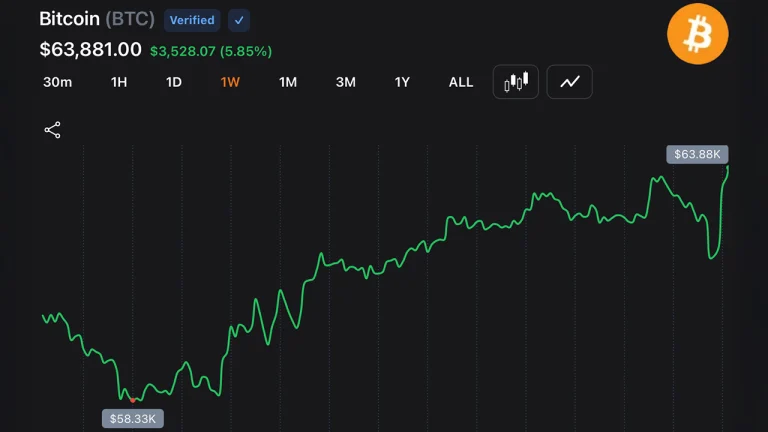
Bitcoin Surges Past $63,500 as $214M Short Squeeze Triggers Massive Rebound
The market volatility was further complicated by a $216 million Bitcoin sale by MicroStrategy, sparking intense debate regarding institutional treasury strategies. Despite this selling pressure, Bitcoin has managed to maintain a nearly 7% gain for early July, demonstrating significant strength amidst high-stakes liquidations and shifting market sentiment.

Whale Move: Bitmine Drops $74M on Ether Amid Growing Optimism for Clarity Act
This bullish stance is fueled by regulatory anticipation surrounding the Digital Asset Market Clarity (CLARITY) Act in the United States. Bitmine Chairman Tom Lee suggests that the passage of this legislation could serve as a major catalyst, providing the legal framework necessary for smart contract platforms like Ethereum to thrive and integrate deeper into the financial ecosystem.

Money Laundering Crackdown: Brazilian Police Target Illegal Betting Rings Using Crypto
This crackdown highlights the growing intersection between unregulated betting platforms and the crypto market. By targeting these irregular movements, authorities aim to curb the use of digital assets in money laundering schemes and tighten control over the illicit flow of capital within the online gambling industry.
