Decrypt

Coldcard Wallet Flaw Costs Over $100 Million, Reignites Debate on Bitcoin Security and Entropy

August 4, 202604:11 PM
Coldcard Wallet Flaw Costs Over $100 Million, Reignites Debate on Bitcoin Security and Entropy

A critical vulnerability in Coldcard wallets has resulted in losses exceeding $100 million for Bitcoin holders, exposing fundamental flaws in key generation and entropy processes. The exploit, which questions the security of traditional random number generation methods, represents one of the largest security incidents in the Bitcoin ecosystem this year. The case directly involves the reliability of random data and security protocols in hardware wallets.

The incident has reignited an old debate about the reliability of dice and entropy generation methods in the context of hardware wallets. Experts now question whether reliance on external random data, such as dice rolls, is sufficient to ensure the security of high-value Bitcoin wallets. This case serves as a crucial warning to the cryptocurrency industry about the need for more robust security protocols and rigorous independent audits.

This is a summarized and adapted version by Artificial Intelligence. To read the complete original story, visit the official source.

Read Full Article at Decrypt
QR Code Lightning

Support Jornal Bitcoin

Independent journalism, curated by AI, no clickbait. Keep the flame alive with any amount of BTC.

Wallet of Satoshi
jonata@walletofsatoshi.com

Daily Crypto Brief 📬

Subscribe to receive the curation of the most important Bitcoin and crypto news, summarized by AI. No spam.

Join more than 10,000 smart readers.

Related News

Warren and Blumenthal Demand SEC Investigation into TRUMP Memecoin on Solana
Crypto Briefing★ Featured

Warren and Blumenthal Demand SEC Investigation into TRUMP Memecoin on Solana

U.S. Senators Elizabeth Warren and Richard Blumenthal are demanding the SEC investigate the TRUMP memecoin on the Solana blockchain, a move that could redefine crypto regulations and directly impact memecoin markets. This investigation highlights potential limits of crypto-friendly policies and could set a precedent for how regulators will handle politically-themed digital assets, with significant implications for the future of the cryptocurrency industry.
CryptoPotato

AVAX Surges 7% While Market Slumbers – These Catalysts Explain the Rally
AVAX is surging 7% while the broader crypto market slumbers, driven by significant increases in Real World Asset (RWA) activity and network developments on Avalanche. This momentum has pushed the token into a major demand zone, signaling growing investor interest in the protocol. The growing adoption of Real World Assets on the Avalanche network is attracting institutional capital and expanding the protocol's ecosystem, which could support AVAX's price long-term. While many tokens struggle to maintain value, AVAX stands out as a project with solid fundamentals and concrete developments, positioning it as one of the most promising projects in the DeFi space.
Bitcoin Surges to $64,360 as Bitfinex Issues Downside Warning

Bitcoin.com

Bitcoin Surges to $64,360 as Bitfinex Issues Downside Warning

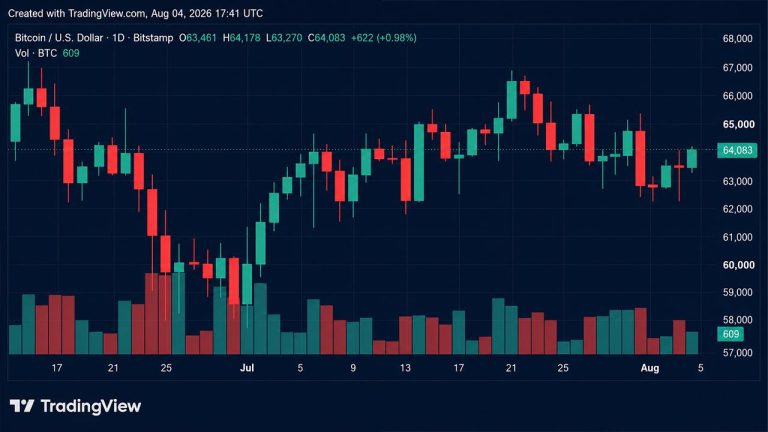
Bitcoin successfully defended the $63,500 support level, reaching a session high of $64,360 with a 0.8% gain, while maintaining a market cap of $1.29 trillion. Despite this bullish momentum, the Bitfinex exchange has issued warnings about potential downside risks in the cryptocurrency market. The recent price surge triggered a significant short squeeze, wiping out $35 million in short positions as traders who bet against Bitcoin faced substantial losses. This development highlights the inherent volatility of the cryptocurrency market and underscores the importance of robust risk management, particularly as Bitcoin trades near recent all-time highs.
AI: A More Immediate Threat to Bitcoin Than Quantum Computers
CryptoSlate★ Featured

AI: A More Immediate Threat to Bitcoin Than Quantum Computers

Artificial Intelligence has emerged as a more concrete and immediate threat to Bitcoin security than quantum computers, according to industry experts. While quantum computing still represents a future risk, vulnerabilities in Bitcoin's offline keys already being exploited by AI pose a present danger. Offline keys, which depend on entropy, firmware, signing, and recovery, built from fallible software and hardware, have become easy targets for advanced AI algorithms.

This revelation sets off a red alert for the Bitcoin community, highlighting the urgent need for more robust security solutions. AI's ability to identify patterns and vulnerabilities in hardware and software systems represents an unprecedented challenge for decentralized financial sovereignty. As the quantum race continues, the community must prioritize developing AI-resistant protocols and educating users about the risks associated with existing cryptocurrency storage solutions.

Bybit Scores Austrian EMI License, Expanding European Reach with Payment Features
Bitcoin.com

Bybit Scores Austrian EMI License, Expanding European Reach with Payment Features

Cryptocurrency exchange Bybit has secured an Electronic Money Institution (EMI) license from Austria's Financial Market Authority (FMA), marking a significant expansion of its European footprint. This strategic license will enable Bybit to develop new payment features, including peer-to-peer transfers and card initiatives, strengthening its position in the European crypto market.

The acquisition of the EMI license represents a major milestone in Bybit's regulatory compliance strategy, demonstrating the platform's commitment to European financial regulations. With this approval, Bybit Payments GmbH, the exchange's local subsidiary, can offer broader financial services to European users, potentially increasing its user base and transaction volume across the continent. This move follows a growing trend of cryptocurrency exchanges seeking to establish regulated operations in Europe to meet the requirements of the Single Euro Payments Area (SEPA).

Hashdex Shuts Down Bitcoin ETF in US: Failure to Attract Investors Forces Closure
Portal do Bitcoin

Hashdex Shuts Down Bitcoin ETF in US: Failure to Attract Investors Forces Closure

Hashdex, the Brazilian digital asset manager, will announce the closure of its Bitcoin ETF in the United States later this month, marking the end of an initiative that faced significant challenges in attracting investors. The product, which allowed direct exposure to Bitcoin through a regulated structure in the US, failed to attract the necessary volume of capital to sustain its operations. This closure reflects the challenges faced by new entrants in the competitive US cryptocurrency ETF market, even with the growing institutional adoption of Bitcoin. Hashdex's decision comes at a time when other Bitcoin ETFs in the US continue to attract significant capital inflows, highlighting the difficulty of differentiation in a saturated market.
Jornal Bitcoin Logo
