$1.5 Billion Crypto Hack: Court Freezes Stolen Funds From North Korea

Cryptocurrency exchange Bybit has secured a major legal victory, obtaining a preliminary injunction blocking the movement or sale of $1.5 billion in stolen crypto from North Korean-linked hackers. The exchange sued the North Korean government, its Reconnaissance General Bureau, and the Lazarus Group in the US District Court for the District of Columbia, successfully freezing the illicitly obtained digital assets.
This court case is exposing the reality of crypto's supposed "irreversibility," demonstrating that despite decentralized transaction systems, legal authorities can intervene to recover stolen funds. The injunction covers identified assets but doesn't confirm the full $1.5 billion stolen, setting a significant precedent for crypto security and holding nation-states accountable for financial cyberattacks.
This is a summarized and adapted version by Artificial Intelligence. To read the complete original story, visit the official source.
Read Full Article at CryptoSlateSupport Jornal Bitcoin
Independent journalism, curated by AI, no clickbait. Keep the flame alive with any amount of BTC.
jonata@walletofsatoshi.comDaily Crypto Brief 📬
Subscribe to receive the curation of the most important Bitcoin and crypto news, summarized by AI. No spam.
Join more than 10,000 smart readers.
Related News

Alphabet's $205B AI Investment Sparks Nvidia, Broadcom Rally
US$ 200 Trillion in Institutional Capital Could Transform Bitcoin Forever in the Next Decade

Brazil Central Bank Slams Brakes on Large Crypto Transfers Abroad
The BCB's decision represents one of the most significant regulatory hurdles for the crypto sector in Brazil since recent legislation. Experts warn that this measure could slow crypto adoption and negatively affect pricing, particularly for investors using Brazilian platforms. Brazil's crypto industry is now seeking dialogue with authorities to find a balance between regulatory control and financial innovation.

Brazil's Central Bank Slams Brakes on Large Crypto Transfers Above $10,000
The regulation reflects growing concerns among Brazilian authorities about capital flight and money laundering through digital assets. Exchanges must now implement systems to identify and delay suspicious transactions, potentially impacting liquidity and the speed of international crypto operations. This positions Brazil alongside other emerging economies seeking to balance financial innovation with protection of the traditional financial system.

US Senate to vote on advancing CLARITY Act in September after Thune files cloture
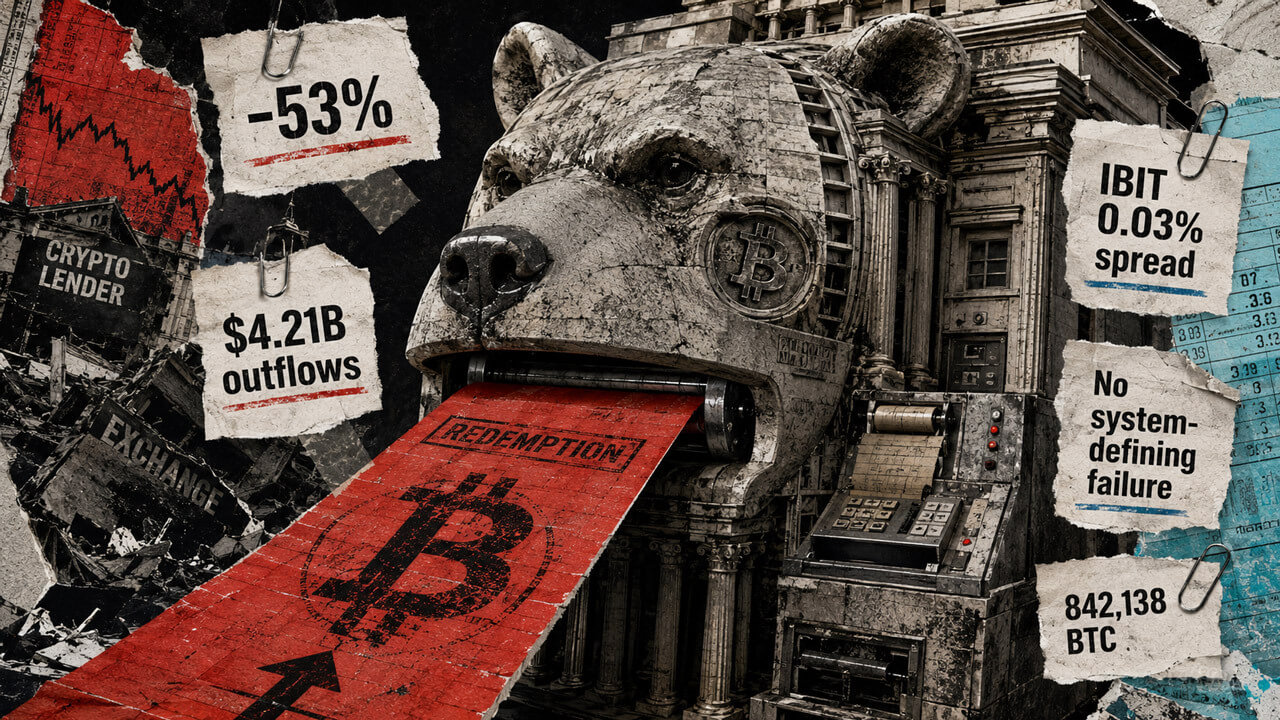
Bitcoin's First Institutional Bear Market Takes Shape, Draining Liquidity
This phenomenon marks a turning point in Bitcoin's history, representing its first experience with an institutionalized bear market. The reduction in liquidity within Bitcoin ETFs could have profound consequences for price and market stability, potentially accelerating volatility and testing the resilience of institutional investors. Meanwhile, custodians continue their normal operations, indicating that the market infrastructure is prepared to withstand this new phase of pressure on institutional Bitcoin.
