Blackrock's IBIT Rakes in $479M as Bitcoin ETFs Extend Unstoppable Streak
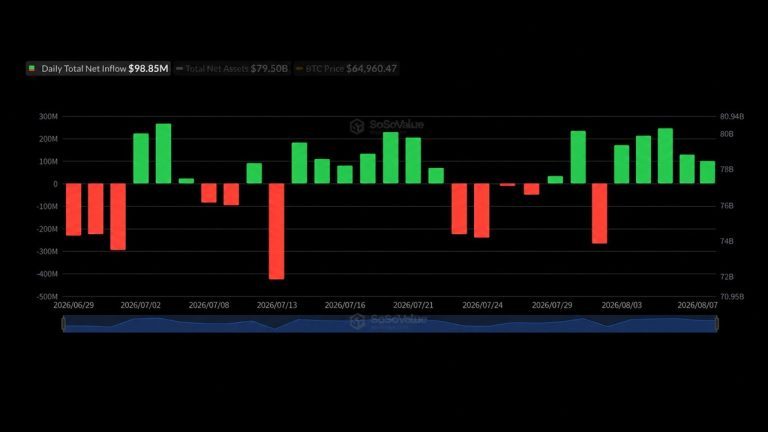
U.S. spot bitcoin exchange-traded funds (ETFs) added a remarkable $98.85 million on August 7, extending their inflow streak to five consecutive trading days, while spot ether ETFs attracted $49.60 million the same day, marking the fourth straight day of gains. Blackrock's IBIT fund led the charge with a record $479 million in assets under management, demonstrating the growing institutional confidence in digital assets.
This upward trend occurs amid an increasingly favorable regulatory environment and the growing institutional adoption of cryptocurrencies. Market experts attribute the continued capital inflows to the search for diversification and inflation protection, with Bitcoin ETFs proving to be an accessible entry point for traditional investors. The robust performance of these innovative financial products is solidifying the position of cryptocurrencies in the global investment landscape, with analysts predicting that the inflow streak could continue as more institutions seek exposure to the cryptocurrency market.
This is a summarized and adapted version by Artificial Intelligence. To read the complete original story, visit the official source.
Read Full Article at Bitcoin.comSupport Jornal Bitcoin
Independent journalism, curated by AI, no clickbait. Keep the flame alive with any amount of BTC.
jonata@walletofsatoshi.comDaily Crypto Brief 📬
Subscribe to receive the curation of the most important Bitcoin and crypto news, summarized by AI. No spam.
Join more than 10,000 smart readers.
Related News
Bitcoin ETFs Score Perfect Week as Inflows Hit 3-Month High

US Spot Bitcoin ETFs See $1B Inflows, Best Week Since April

Bitcoin, XRP, Solana, Tron Crush Ethereum and Cardano: Investors Lose 12.5% Since 2022

Grok Builds Fully Rigged 3D Spaceship in Blender Using Just Text
US$ 200 Trillion in Institutional Capital Could Transform Bitcoin Forever in the Next Decade

Brazil's Central Bank Slams Brakes on Large Crypto Transfers Above $10,000
The regulation reflects growing concerns among Brazilian authorities about capital flight and money laundering through digital assets. Exchanges must now implement systems to identify and delay suspicious transactions, potentially impacting liquidity and the speed of international crypto operations. This positions Brazil alongside other emerging economies seeking to balance financial innovation with protection of the traditional financial system.
