Staking Success, Trading Disaster: BitMine Earns $46M on Ethereum Only to Lose Double That on Options

BitMine successfully leveraged one of the world's largest corporate Ethereum holdings to generate $46 million in staking rewards last quarter. However, this steady income stream was completely obliterated by a disastrous $92.1 million loss incurred through aggressive Ethereum options betting.
This massive deficit, coupled with rising treasury costs and aggressive share issuance, is severely weakening the economic outlook for existing shareholders. The situation highlights the extreme volatility and danger of balancing stable Ethereum staking yields against high-stakes derivative trading.
BitMine's ambitious strategy to convert its massive Ethereum treasury into a recurring revenue stream hit a major roadblock this quarter. While the company successfully generated nearly $46 million from Ethereum staking, those gains were dwarfed by a staggering $92.1 million loss in the options market.
According to fiscal third-quarter data, the company's financial position is further strained by escalating treasury costs and a heavy reliance on share issuance. For shareholders, the combination of massive trading losses and equity dilution presents a complex and challenging landscape for the company's future valuation.
This is a summarized and adapted version by Artificial Intelligence. To read the complete original story, visit the official source.
Read Full Article at CryptoSlateSupport Jornal Bitcoin
Independent journalism, curated by AI, no clickbait. Keep the flame alive with any amount of BTC.
jonata@walletofsatoshi.comDaily Crypto Brief 📬
Subscribe to receive the curation of the most important Bitcoin and crypto news, summarized by AI. No spam.
Join more than 10,000 smart readers.
Related News

Trump Moves to Fast-Track Crypto Regulation: High-Stakes Senate Meeting on Digital Asset Act
This legislative push could serve as a major turning point for market confidence, potentially driving significant upward pressure on Bitcoin's valuation. By providing institutional-grade certainty, the act seeks to bridge the gap between traditional finance and the burgeoning crypto economy.

Peter Schiff Warns: Bitcoin Holders Will Regret Missing This Exit Opportunity
Looking ahead, the impact of a potential breakdown could be massive, with Schiff projecting a descent below the $50,000 mark. He anticipates a brutal correction that could see Bitcoin bottom out in the $20,000 to $30,000 range, highlighting the intense volatility inherent in the crypto market.

High-Stakes Gamble: CleanSpark Signs $6.6B AI Lease Before Securing $2.1B Construction Funding
The 175 MW contract provides a long-term revenue roadmap, yet a significant funding gap remains as the company seeks $2.1 billion to complete the build. The deal includes strict performance milestones, where failure to meet specific targets could lead to reduced rent or the termination of the lease entirely.
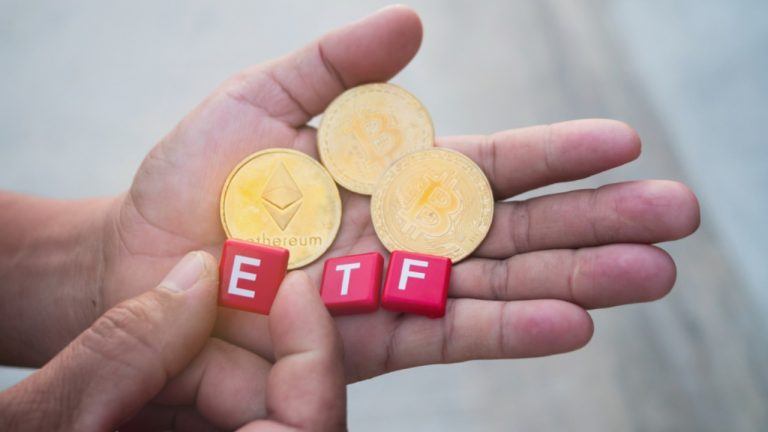
ETF Surge: Bitcoin and Ether Inflows Hit $239M as Japan Eyes Crypto ETF Approval
Despite the massive gains for Bitcoin and Ether, the altcoin ETF sector remained remarkably stagnant, with XRP and Solana products seeing zero trading activity. The broader market sentiment is being bolstered by news from Japan, which is moving closer to embracing crypto ETFs, potentially reshaping the global landscape for digital asset investment.

Bitcoin Surges Past $65,500 as US Inflation Data Comes in Cooler Than Expected
Softer inflation data in the US provides a bullish backdrop for Bitcoin, as it lowers the probability of prolonged high interest rates. As investors digest these figures, the impact on liquidity and institutional interest remains a key focal point for the digital asset's short-term trajectory.

Aave V4 Lands on Avalanche: Paving the Way for Tokenized Credit Markets
This deployment is a critical step toward the mass adoption of tokenized real-world assets (RWA) within decentralized finance. By enabling borrowing against tokenized assets on Avalanche, Aave V4 is bridging the gap between traditional finance and on-chain liquidity, setting a new benchmark for the future of global credit markets.
