The Institutional Myth: Individuals Still Control 66% of All Bitcoin Supply
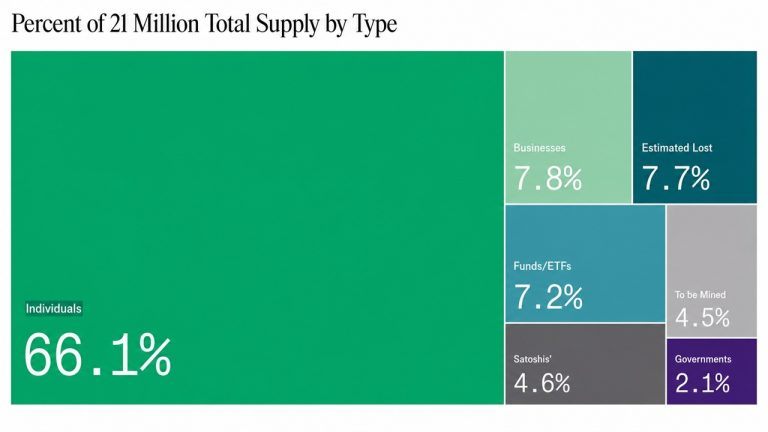
Wall Street isn't in charge of Bitcoin just yet. New data from asset manager Bitwise reveals that individual investors hold a massive 66.1% of the total Bitcoin supply, proving that retail power remains the backbone of the network. This onchain analysis highlights a level of decentralization that contradicts the narrative of total institutional takeover.
With businesses holding only 7.8% and ETFs accounting for just 7.2%, the market remains driven by individual holders rather than corporate entities. This distribution suggests that despite the influx of institutional capital, the core ownership of Bitcoin remains firmly in the hands of the people.
Who actually owns Bitcoin? It turns out it isn't Wall Street or major institutions. According to a breakdown released by asset manager Bitwise, individual investors hold 66.1% of Bitcoin’s total supply, dwarfing the 7.8% held by businesses and the 7.2% sitting in funds and exchange-traded funds (ETFs).
Based on public wallet data and rigorous onchain analysis, the report confirms that retail investors still dominate the market. While institutional adoption continues to make headlines, the fundamental ownership structure of Bitcoin remains decentralized and firmly controlled by individual holders.
This is a summarized and adapted version by Artificial Intelligence. To read the complete original story, visit the official source.
Read Full Article at Bitcoin.comSupport Jornal Bitcoin
Independent journalism, curated by AI, no clickbait. Keep the flame alive with any amount of BTC.
jonata@walletofsatoshi.comDaily Crypto Brief 📬
Subscribe to receive the curation of the most important Bitcoin and crypto news, summarized by AI. No spam.
Join more than 10,000 smart readers.
Related News
Massive Crypto Shift: US Government Moves $288M in Seized Assets to Coinbase Prime
While the transfer stops short of an actual sale, it has reignited intense scrutiny regarding political pledges, specifically Donald Trump's 'no-sell' promise. The movement of these seized coins could influence market sentiment and raises critical questions about how the US government intends to handle large-scale crypto liquidations in the future.

U.S.-Iran Escalation Hits Bitcoin and Stocks as Oil Prices Surge
With oil prices climbing in response to the Middle East instability, the macroeconomic fallout could intensify the pressure on Bitcoin. The interplay between energy security and market liquidity suggests that this geopolitical friction will remain a primary driver of market volatility in the near term.

UK Crypto Tax Revolution: 'No Gain, No Loss' Rule for Lending Set for 2027
This policy change is expected to act as a catalyst for increased participation in crypto lending, potentially reshaping market demand and investor sentiment. By lowering the tax friction associated with DeFi contexts, the UK is positioning itself as a more competitive hub for decentralized finance and digital asset innovation.
Bitcoin Under Threat: Analyst Predicts Potential Drop Below $40K
According to recent market intelligence, Bitcoin may have a window of approximately 80 days to reach its bottom. This projected timeframe highlights a period of intense market pressure that could reshape long-term price structures and test the resilience of current bullish sentiment among crypto investors.

Banking Rails: How Institutions Are Positioning to Profit from 13.9 Million BTC They Don't Own
By building out these services, banks are positioning themselves to extract value from the 13.9 million BTC currently held by the market. This strategic expansion into lending and institutional-grade infrastructure suggests that banks aim to become the primary gatekeepers of the Bitcoin economy without the need for direct balance sheet ownership.

Bitcoin Under Pressure: BTC Drops to $62K Ahead of US Inflation Data and Fed Speech
Market sentiment is currently weighed down by rising probabilities of higher interest rates in the US later this month. As traders brace for potential hawkish signals, the BTC price remains highly sensitive to macroeconomic shifts, making this a decisive moment for determining the next major trend in the crypto space.
