Mining Relief: Bitcoin’s 14th Difficulty Reset Slashes Network Pressure by 6.7 Trillion
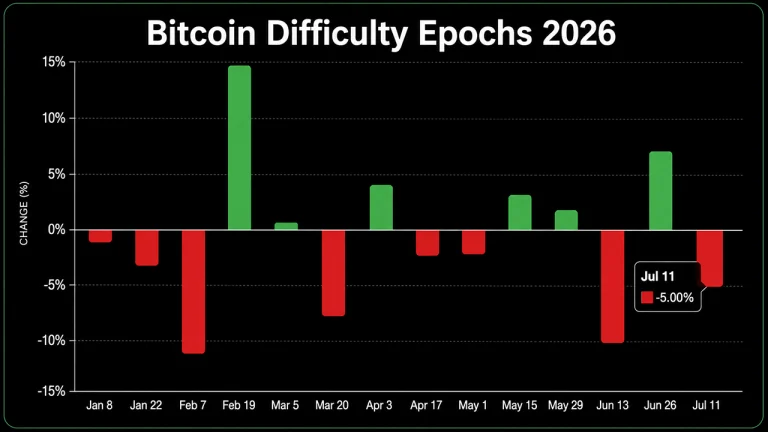
Bitcoin's mining landscape has shifted following the network's 14th difficulty adjustment of 2026. The mining difficulty plummeted by 5%, dropping from 133.87 trillion to 127.17 trillion at block height 957600, effectively slashing network pressure by a staggering 6.7 trillion.
This adjustment brings the difficulty metric closer to its yearly lows, reflecting a significant recalibration of the network's computational requirements. As the hashrate adjusts to this new reality, market participants are closely monitoring the impact on miner profitability and the overall security equilibrium of the Bitcoin blockchain.
This is a summarized and adapted version by Artificial Intelligence. To read the complete original story, visit the official source.
Read Full Article at Bitcoin.comSupport Jornal Bitcoin
Independent journalism, curated by AI, no clickbait. Keep the flame alive with any amount of BTC.
jonata@walletofsatoshi.comDaily Crypto Brief 📬
Subscribe to receive the curation of the most important Bitcoin and crypto news, summarized by AI. No spam.
Join more than 10,000 smart readers.
Related News

Bitcoin ETF Flows Stabilize—Now CPI Tests the Bounce as Fed Rate-Hike Risk Returns
The CPI print matters because it can shift rate expectations and, in turn, the pace of Bitcoin ETF flows. A hotter-than-expected report may trigger repricing toward tighter policy, pressuring BTC; a cooler CPI could support a renewed bid, reinforcing the current “steady flows” narrative around Bitcoin ETFs in the near term.
Regulatory Breakthrough? House Set to Debate Digital Asset Market Clarity Act in NYC
Beyond mere procedure, the hearing carries immense weight for market sentiment and legislative momentum. By addressing the framework for digital assets, lawmakers aim to bolster market confidence and establish a stable environment that could trigger a new wave of institutional participation in the crypto space.

Middle East Explosion: US Strikes Bandar Abbas and Qeshm Island as Iran Ceasefire Collapses
Beyond the immediate kinetic warfare, the heightened instability in Iran could pave the way for forced regime change, fundamentally reshaping the geopolitical landscape. As global market perceptions shift under the weight of this conflict, the ripple effects are expected to hit high-risk assets and the broader macroeconomy with unprecedented force.

The $122M Heist: Interpol Targets Crypto Wallet Linked to 20-Year-Old Fraudster
Originating from a case in Thailand, this incident underscores the growing difficulty of tracking digital assets as criminals increasingly utilize cross-chain token swaps. By moving assets across different services and borders, bad actors attempt to exploit the complexity of decentralized finance to evade detection.
Signs of Life? New Clarity Act Draft Expected to Drop This Week
Despite the renewed momentum, significant hurdles remain before the act can be fully implemented. The outcome of this legislative push will determine whether the crypto market finds the stability it needs or continues to face a fragmented regulatory landscape.

Saylor's Signal Problem: Why Ambiguous Messaging Could Stall Bitcoin's Momentum
This communication friction comes as the world's largest digital asset treasury company shifts its long-standing 'never sell' mantra. Strategy has recently pivoted to a more flexible approach, selling Bitcoin to fund dividends for preferred stock holders and replenish cash reserves. Following a recent $216 million BTC sale, the market is closely monitoring how this shift in treasury management impacts Bitcoin's price action.
