Bitcoin Devs Plan Radical Algorithm Switch as Miners Reject BIP-110 Soft Fork
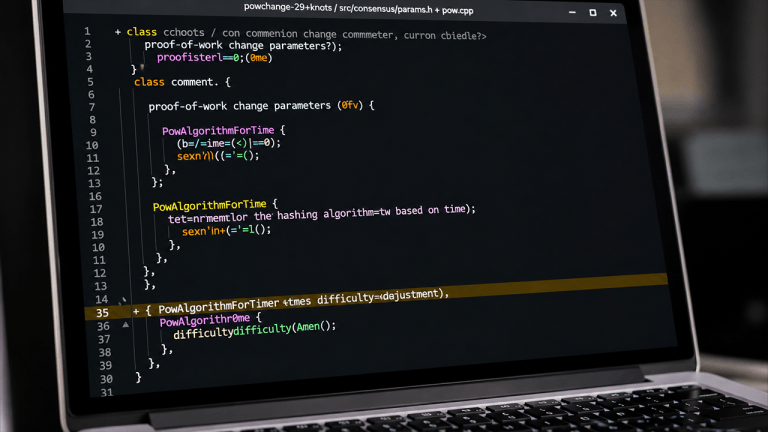
Bitcoin developer Chris Guida has prepared contingency code that could swap the mining algorithm on a breakaway BIP-110 chain if miners refuse to implement the proposed soft fork. With the activation height approaching rapidly, supporters are now openly discussing a proof-of-work swap to avoid being stranded on a weak minority chain that stops moving. This represents a rare and drastic step in the Bitcoin community, highlighting growing tensions between developers and miners. If implemented, the algorithm swap would create a new Bitcoin with different mining rules, potentially splitting the network and creating uncertainty for exchanges, pools, and users.
This is a summarized and adapted version by Artificial Intelligence. To read the complete original story, visit the official source.
Read Full Article at Bitcoin.comSupport Jornal Bitcoin
Independent journalism, curated by AI, no clickbait. Keep the flame alive with any amount of BTC.
jonata@walletofsatoshi.comDaily Crypto Brief 📬
Subscribe to receive the curation of the most important Bitcoin and crypto news, summarized by AI. No spam.
Join more than 10,000 smart readers.
Related News

Carbon Unleashes Revolutionary On-Chain Derivatives Platform with 950+ Markets in One Account
The launch, which took place on August 7, 2026, in the British Virgin Islands, represents a pivotal moment in the convergence of traditional and digital finance. By consolidating 950+ markets into one on-chain platform, Carbon democratizes access to complex financial instruments that previously required multiple accounts and intermediaries, potentially reducing costs and increasing efficiency for global investors. This integration could accelerate mainstream adoption of digital assets and fundamentally reshape how traders interact with the global derivatives market.
Your Cypher or Osmosis card dies tonight: spend now or lose access forever!
The discontinuation of these crypto cards could trigger severe financial consequences for those who fail to act promptly. Users need to prioritize transferring their assets to secure, verified wallets immediately. This event underscores the critical importance of proactive digital wallet management and the inherent risks associated with unregulated crypto financial services.

Russia Cracks Down on Unlicensed Crypto Exchanges Tied to Ukraine, Arrests 20 in Major Fraud Ring
This crackdown marks a new front in the ongoing geopolitical conflict between Russia and Ukraine, with Moscow leveraging cryptocurrency regulation as a strategic weapon. The FSB's operation intensifies Russia's crackdown on the crypto sector, which has faced increasing restrictions since the invasion of Ukraine, potentially leading to greater market centralization under state control and affecting thousands of investors and businesses in the cryptocurrency space.
Cardano (ADA) Flashes Major Bullish Signal That Could Trigger 200% Pump
This bullish formation could potentially trigger a massive 200% price pump, positioning ADA as one of the most promising cryptocurrencies in the current market cycle. The positive technical analysis, combined with Cardano's strong fundamentals and growing ecosystem, is attracting both institutional investors and retail traders seeking high-potential opportunities in the crypto space.

Ethereum's EIP-8363 Staking Proposal Sparks Fierce Backlash Amid DeFi and Decentralization Concerns
The fierce backlash against EIP-8363 raises significant concerns about the future of DeFi, decentralization, and institutional adoption on Ethereum. Critics warn that this economic shift could discourage network participation, negatively impacting the DeFi ecosystem and potentially weakening long-term security. While proponents defend the need to adjust staking rewards to prevent excessive dilution, the debate underscores the complex tensions between security, decentralization, and adoption in proof-of-stake blockchains. The Ethereum community now faces the challenge of balancing these competing concerns as the network continues to evolve following its transition to proof-of-stake.