Crypto Briefing

Bank of England considers ending QT: Crypto markets could surge

August 5, 202603:20 AM
Bank of England considers ending QT: Crypto markets could surge

The Bank of England (BoE) is considering ending its quantitative tightening (QT) program, a move that could reshape global market dynamics and potentially boost cryptocurrency valuations. According to sources cited by the Financial Times, monetary policymakers are evaluating the ongoing effects of QT on the UK economy.

A halt in QT by the BoE could ease pressures on international financial markets, potentially increasing prices for risk assets including cryptocurrencies. This potential policy shift comes amid growing speculation about a possible adjustment in the global monetary tightening cycle, with investors closely monitoring signals from major central banks.

This is a summarized and adapted version by Artificial Intelligence. To read the complete original story, visit the official source.

Read Full Article at Crypto Briefing
QR Code Lightning

Support Jornal Bitcoin

Independent journalism, curated by AI, no clickbait. Keep the flame alive with any amount of BTC.

Wallet of Satoshi
jonata@walletofsatoshi.com

Daily Crypto Brief 📬

Subscribe to receive the curation of the most important Bitcoin and crypto news, summarized by AI. No spam.

Join more than 10,000 smart readers.

Related News
Massive Inflows into Bitcoin, Ethereum, Solana Spot ETFs Signal Market Confidence Surge

Crypto Briefing

Massive Inflows into Bitcoin, Ethereum, Solana Spot ETFs Signal Market Confidence Surge

Bitcoin, Ethereum, and Solana spot ETFs recorded significant inflows on August 4, indicating growing investor confidence in the cryptocurrency market. This capital movement reflects a positive sentiment shift and potentially signals the beginning of a new upward cycle for digital assets. The inflow of capital into cryptocurrency ETFs represents a significant milestone for institutional adoption, providing a regulated and accessible pathway for traditional investors. These capital flows could drive future price increases, enhance market liquidity, and solidify cryptocurrencies' status as a legitimate asset class, with potential long-term consequences for the global financial ecosystem.
AI Credit Bubble Could Fuel Bitcoin 'Crack-Up Boom' Past $1M: Hayes

CoinTelegraph★ Featured

AI Credit Bubble Could Fuel Bitcoin 'Crack-Up Boom' Past $1M: Hayes

BitMEX co-founder Arthur Hayes warns that the debt-fueled artificial intelligence infrastructure boom could trigger a 2008-style financial crisis. According to the crypto veteran, the government's liquidity response to such a scenario could propel Bitcoin past $1 million, creating a historic opportunity for cryptocurrency investors. Hayes argues that investors are mistakenly treating spending on data centers and power infrastructure as high-growth technology investments when it's actually leveraged real estate. He predicts lenders will finance excessive construction before a slowdown in AI capital expenditure exposes weaker borrowers.
Crypto Project That Aims to Replace US Banking System Pulls 10 Trillion Token Filing
CryptoSlate★ Featured

Crypto Project That Aims to Replace US Banking System Pulls 10 Trillion Token Filing

An ambitious crypto project aiming to replace the US banking system has just delivered a stunning blow by pulling its registration for 10 trillion Locke tokens. The move, made on August 3rd, stopped this Form 10 before effectiveness, leaving the maximum authorized 10 trillion tokens unissued. This abrupt decision raises serious questions about the project's viability and future plans, which had promised to revolutionize America's financial infrastructure.

The withdrawal of the filing represents a significant setback for the blockchain project and the cryptocurrency sector as a whole. Investors and enthusiasts are speculating about the possible reasons behind this last-minute change, including regulatory concerns or technical issues. This incident serves as a reminder of the volatility and uncertainties inherent in the crypto space, especially for large-scale projects that challenge established financial systems. The project's future and its potential impact on the American banking system remain uncertain.

US Keeps Israel in Dark on Iran Talks, Fueling Market Uncertainty
Crypto Briefing

US Keeps Israel in Dark on Iran Talks, Fueling Market Uncertainty

The United States' indirect approach to Iran talks, keeping Israel informed only through secondary channels, is creating significant tensions in diplomatic relations between the two allied nations. This limited communication strategy, adopted during an extremely sensitive negotiation period, is generating concerns in global financial markets about regional stability and potential outcomes of the discussions.

Washington's decision not to directly share information with Jerusalem about negotiations with Tehran represents an unprecedented departure from traditional security cooperation between the countries. Geopolitical analysts warn that this posture could erode mutual trust and complicate efforts to contain Iran's nuclear program. For markets, particularly the crypto sector, this diplomatic uncertainty adds a new layer of volatility, with investors closely monitoring developments that could impact the pricing of risk assets.
Lookonchain: Strategy Wallet Moves 1,030 BTC as Fourth Bitcoin Sale Looms
Bitcoin.com

Lookonchain: Strategy Wallet Moves 1,030 BTC as Fourth Bitcoin Sale Looms

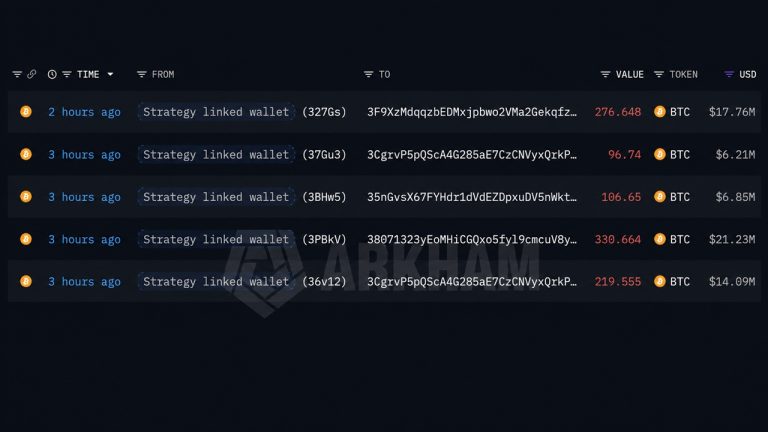
A wallet linked to Michael Saylor's Strategy moved 1,030 BTC worth $66.14 million recently, just days after the company confirmed its third bitcoin sale of the year. Onchain analytics platform Lookonchain flagged the transfer, questioning whether Michael Saylor's Strategy is "dumping BTC again" after wallets linked to the company sent large amounts of the cryptocurrency.

This movement comes at a critical time for the cryptocurrency market as investors closely monitor the actions of large bitcoin holders. Saylor's strategy, which has focused on accumulating bitcoin as a corporate treasury reserve, is now under scrutiny after multiple sales this year. A potential fourth sale could impact bitcoin's price and market perception of MicroStrategy's long-term strategy, as the company has been one of the most prominent bitcoin advocates.

Ethereum Proposal Could Eliminate ETH Issuance if Staking Hits $112 Billion
CoinDesk★ Featured

Ethereum Proposal Could Eliminate ETH Issuance if Staking Hits $112 Billion

The new EIP-8361 proposal introduces an innovative mechanism that could completely eliminate ETH issuance if the value of staked ETH reaches $112 billion. This revolutionary proposal burns a rising share of validator rewards as the staking ratio increases, potentially transforming Ethereum into a deflationary asset under certain conditions. This significant change to Ethereum's monetary policy represents one of the most important developments for the ecosystem since the merge. The EIP-8361 proposal could intensify ETH deflation, further increasing the token's scarcity and potentially boosting its value. With the continued growth of Ethereum staking, this automatic burning mechanism could become a crucial factor in the supply and demand dynamics of the world's second-largest cryptocurrency.
Jornal Bitcoin Logo
