The End of Unbreakable? Anthropic's Claude Cracks Post-Quantum Cryptography Humans Failed to Break

A massive breakthrough in cybersecurity has emerged as Anthropic’s Claude model successfully identified a novel attack on a post-quantum signature scheme. This specific protocol, which had remained unbroken by human experts for years, is currently headed for U.S. federal standardization, marking a pivotal moment in the evolution of AI-driven cryptanalysis.
The implications are profound for global security infrastructures. As we transition toward a post-quantum era, the ability of artificial intelligence to bypass advanced cryptographic defenses suggests that current standardization processes may be insufficient. This discovery forces a critical re-evaluation of how we build and validate the next generation of digital security protocols.
Anthropic has achieved a stunning feat in cryptanalysis, with its Claude model uncovering a new attack vector against a post-quantum signature scheme. This protocol was not just any algorithm; it was a candidate for U.S. federal standardization that had successfully withstood years of rigorous scrutiny by the world's leading human cryptographers.
This development highlights a growing tension in the tech industry: as we build defenses to withstand future quantum computers, AI is simultaneously becoming a tool capable of dismantling those very defenses. The fact that a machine could crack a standard intended for national security levels underscores the urgent need for AI-resistant and AI-tested cryptographic frameworks.
This is a summarized and adapted version by Artificial Intelligence. To read the complete original story, visit the official source.
Read Full Article at DecryptSupport Jornal Bitcoin
Independent journalism, curated by AI, no clickbait. Keep the flame alive with any amount of BTC.
jonata@walletofsatoshi.comDaily Crypto Brief 📬
Subscribe to receive the curation of the most important Bitcoin and crypto news, summarized by AI. No spam.
Join more than 10,000 smart readers.
Related News

Medical Robotics Revolution: NVIDIA Releases Open-Source GPU-Native Simulator
By making this high-performance simulation tool accessible, NVIDIA is catalyzing a new era of innovation in healthcare robotics and artificial intelligence. The move is expected to significantly lower the barrier to entry for surgical tech startups, driving faster deployment of AI-driven medical devices and enhancing precision in robotic-assisted surgeries.

Crypto Pioneers Sound the Alarm: Is Government Control Threatening AI Knowledge?
Addressing these fears, Anthropic clarified that its primary concerns regarding AI revolve around misuse—specifically cyberattacks and biological threats—rather than advocating for a ban on open models. This distinction is vital as the industry navigates the thin line between necessary safety protocols and the preservation of decentralized technological advancement.

Clapping Chaos: Teacher Arrested During AI Data Center Public Hearing
The incident underscores the volatile landscape surrounding AI data center development across the United States. As tech giants race to secure land and power, the resulting social and environmental concerns are driving citizens to extreme measures of protest, turning regulatory meetings into flashpoints of civil unrest.

The Death of the Page? Why AI Firms are Shredding Physical Books Under Copyright Law
This shift creates a massive structural advantage for AI developers to treat physical media as disposable. As copyright law evolves to accommodate large language models, the economic incentive to maintain physical libraries diminishes, potentially leading to a future where tangible human knowledge is sacrificed for algorithmic training data.
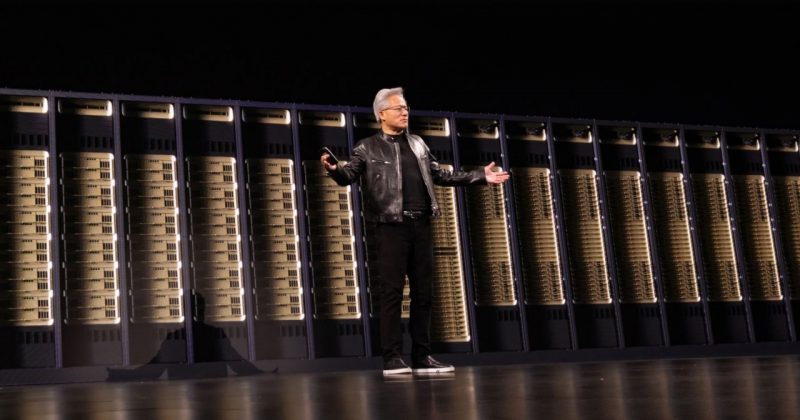
Nvidia's Strategic Pivot: Jensen Huang Inspects Wistron’s Landmark US Facility
By localizing production, Nvidia aims to significantly reduce supply chain vulnerabilities that have long plagued the semiconductor industry. This pivot is expected to stabilize the flow of critical AI components, ensuring that the rapid expansion of artificial intelligence infrastructure remains uninterrupted by international logistics volatility.

AI Chip Surge: KLA Corporation Targets $4B Revenue Amid Semiconductor Boom
Beyond the immediate financial gains, KLA's upward trajectory serves as a vital indicator for the broader tech landscape, including the crypto and AI sectors. By potentially easing chip supply constraints, this growth facilitates faster hardware innovation, providing the computational backbone required for advanced blockchain technologies and large-scale AI deployments.
