Bitcoin Treasury Crisis: Collateral Calls Hit Hard as 12-Hour Liquidation Window Looms
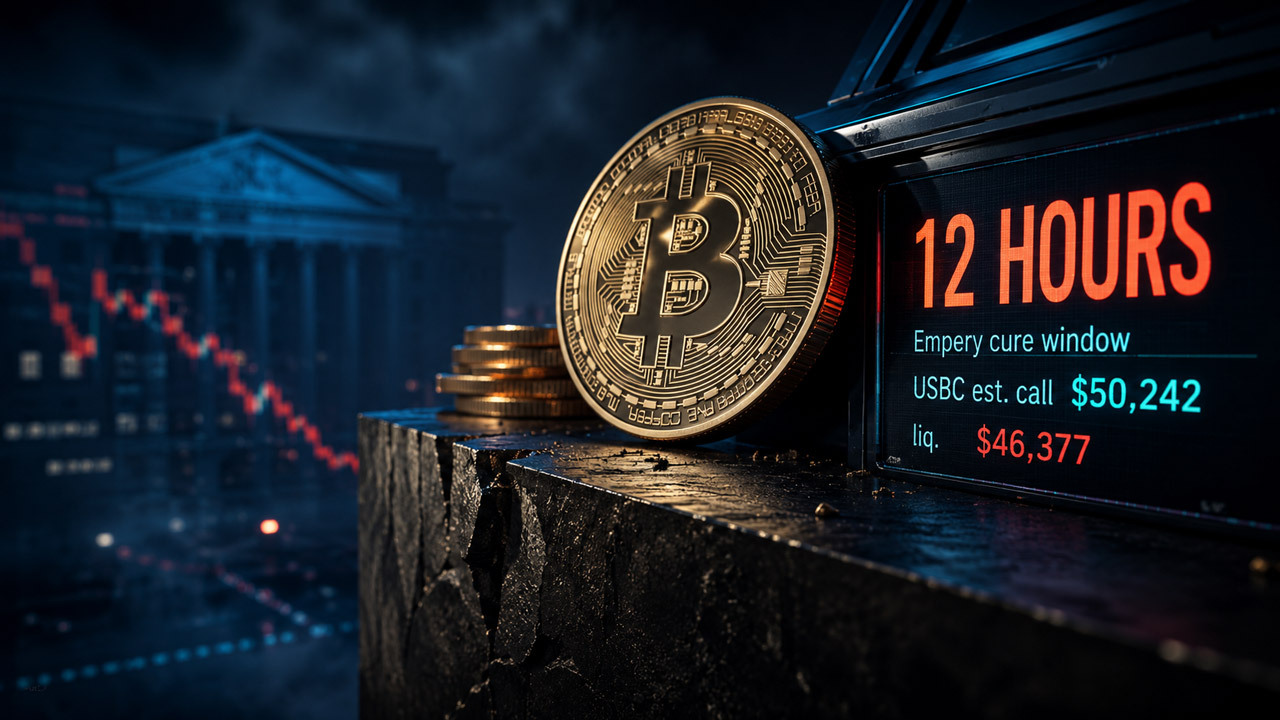
The crypto landscape is bracing for impact as reports confirm that Bitcoin treasuries have already endured two major collateral calls in February 2026. Due to missing collateral data, the market remains blind to which specific treasuries are most vulnerable, leaving investors unable to gauge the true scale of the impending risk.
This instability is compounded by the terrifying speed of modern crypto lending, where certain loans can face liquidation in as little as 12 hours. This narrow window for response means that sudden Bitcoin price swings could trigger a rapid chain reaction of liquidations, potentially destabilizing institutional holders and the broader market.
Bitcoin treasuries have already faced two collateral calls in February 2026, according to recent disclosures. While Empery revealed the existence of these calls, the current lack of granular collateral data hides which specific treasury would be forced to act first to cover their positions. The situation is particularly volatile because some loan structures allow for liquidation in just 12 hours, creating a high-stakes environment where rapid price movements could lead to immediate and massive liquidations.
This is a summarized and adapted version by Artificial Intelligence. To read the complete original story, visit the official source.
Read Full Article at CryptoSlateSupport Jornal Bitcoin
Independent journalism, curated by AI, no clickbait. Keep the flame alive with any amount of BTC.
jonata@walletofsatoshi.comDaily Crypto Brief 📬
Subscribe to receive the curation of the most important Bitcoin and crypto news, summarized by AI. No spam.
Join more than 10,000 smart readers.
Related News

Game Changer? Aave Founder Praises UK's New Crypto Lending Tax Policy
Industry experts suggest that this regulatory clarity could trigger a wave of institutional interest in the UK market. By defining how digital assets and liquidity activities are taxed, the UK is setting a precedent that could influence global crypto lending standards and drive widespread adoption.

Market Warning: Temasek CIO Flags Global Instability Risks from US AI Spending Surge
This heightened market risk highlights a potential disconnect between massive spending and actual profitability. Should the AI revolution fail to deliver the expected economic output, the resulting fallout could lead to widespread volatility, affecting both traditional financial markets and the broader digital asset ecosystem.
War Alert: RT Editor Warns Europe of Massive Russian Retaliation Risks Over Ukraine Strikes
This warning could force Europe into a profound reassessment of its military support to Ukraine, potentially altering the conflict dynamics entirely. For investors and analysts, this political instability introduces significant uncertainty regarding market risk perceptions and global geopolitical volatility.
Bitcoin Standard Treasury Postpones Critical Cantor SPAC Merger Vote to July 10
While the postponement provides a temporary pause, the underlying impact of this merger remains significant for the broader crypto ecosystem. The successful alignment between Bitcoin Standard and Cantor could set a massive precedent for how corporate treasuries utilize Bitcoin within the regulated framework of public equity markets.

The New Capital Play: Preferred Stock Emerges as the Ultimate Financing Tool for Bitcoin Treasury Firms
This trend represents a sophisticated evolution in how corporations leverage Bitcoin for strategic growth. By utilizing preferred shares, these firms can access deep liquidity to aggressively expand their Bitcoin holdings, effectively bridging the gap between traditional finance and the digital asset economy.
Beyond PGP: How Coldcard Q’s Key Teleport is Redefining Bitcoin Treasury Security
Moving beyond the limitations of traditional Tails-OS and PGP setups, the Key Teleport system has proven its mettle by resisting advanced AI-driven decryption attempts. This level of security is vital for institutional-grade Bitcoin holders looking to future-proof their assets against evolving cyber threats and sophisticated computational attacks.
